Blog Details
- Home
- Anesthesia for Joint Replacement Surgery: What to Expect Before and After
- July 14, 2026
- comments (0)
- 8 min read
Anesthesia for Joint Replacement Surgery: What to Expect Before and After
The prospect of a joint replacement surgery may evoke a range of emotions, some good, some bad. Many patients are worried about the anaesthesia that is administered throughout the procedure. When you have questions such as ‘Will I be awake? Is anaesthesia safe?
In modern times, anaesthesia has revolutionised surgery, making it safe and comfortable. Your health status is thoroughly reviewed by an experienced anaesthesiologist, who chooses your best option for anaesthetic for your procedure, closely supervises during your surgery, and works with you to manage pain in your recovery period. For those seeking the best Anaesthesia Services in Nagpur, it is essential to grasp the procedure, enabling you to feel confident and at ease during surgery.
What is Anaesthesia?
Anaesthesia is a specialised medical treatment which is used to block pain and maintain the patient’s comfort during surgery. It can either give you some numbness in a specific part of the body or can render you completely unconscious, depending on the procedure and your health. In addition to pain relief, an anaesthetic also ensures that the breathing, blood pressure and other functions of the body remain stable during surgery.
Types of Anaesthesia Used for Joint Replacement Surgery
There are a variety of anaesthetic options available for joint replacement surgery:
1. General Anaesthesia
General anaesthetic causes the patient to be deeply asleep during the entire surgery.
How it works:
- Given by intravenous (IV) medications and gases.
- You are totally numb and do not feel pain.
- The anaesthesia team monitors and supports you with your breathing.
Best suited for:
- More complex joint replacements
- Patients who do not have an ideal fit for regional anaesthetic.
- Some revision joint replacement surgery
Advantages:
- Complete unconsciousness
- Can be used for long tasks.
2. Spinal Anaesthesia
Spinal anaesthesia is one of the most commonly used techniques for hip and knee replacement surgeries.
How it works:
- A local anaesthetic is given into the fluid in the lower back.
- It causes a kind of temporary numbness in the lower part of the body.
- Patients can be awake or slightly sedated during the procedure to help relax them.
Advantages:
- Reduced chances of blood clots.
- Reduced blood loss
- In addition, there is a decrease in the number of times vomiting occurs.
- Better pain relief immediately after surgery
- Improved recovery and early mobilisation
3. Epidural Anaesthesia
Epidural anaesthesia is the same as spinal anaesthesia, except a small tube (catheter) is inserted into the space between the outer soft tissues of the spine and its inner bony walls.
How it works:
- Patients can receive medication throughout the surgery and after.
- Gives long acting pain relief.
Advantages:
- Surgical procedures are undertaken with excellent post-operative pain management.
- Adjustable dosage
- Can be helpful for those who need longer pain control.
4. Regional Nerve Block
Regional nerve blocks help block sensation from the nerves that supply sensation to the joint being operated on.
Common examples include:
- Femoral nerve block
- Adductor canal block
- Sciatic nerve block
- Interscalene block (for shoulder replacement)
Benefits:
- Excellent pain control
- There is a decrease in the need for opioid medications.
- Earlier rehabilitation
- Improved patient comfort
Spinal or general anaesthetic is often used in combination with nerve blocks.
5. Local Anaesthesia with Sedation
For a few patients, local anaesthetic can be given around the joint and the patient may also be sedated intravenously.
This is not usually done for total joint replacements but can be done for some less invasive surgeries or small orthopaedic surgeries.
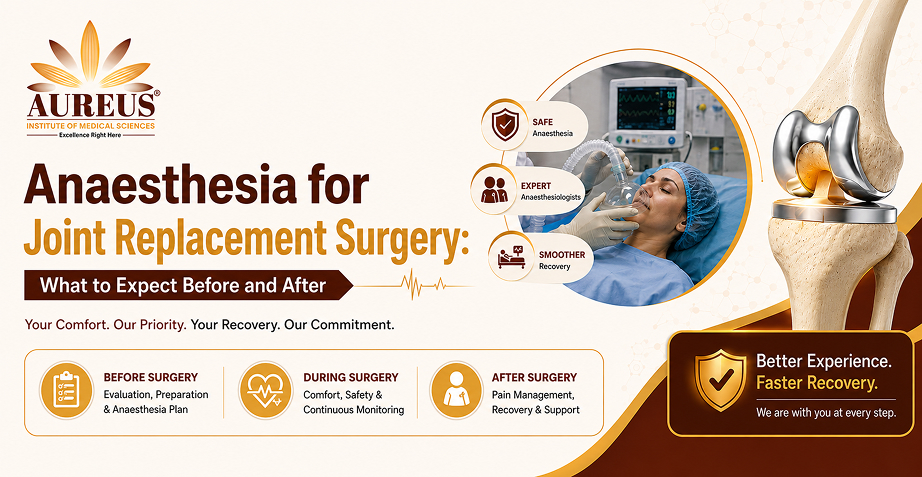
Before Surgery: What to Expect
Anaesthetic preparation starts prior to surgery. The anaesthetist will ask you a number of questions before induction of anaesthetic to get your medical history, previous surgery, allergies, current medicines and health problems like heart disease, diabetes, asthma, high blood pressure etc. You might also have regular tests such as blood tests, ECG (electrocardiogram) or chest X-ray.
There are instructions about fasting before surgery, because it is important that you don’t eat and don’t drink for a certain period of time to stay safe during surgery under anaesthetic. Your doctor may also indicate if you should take certain medicines or stop taking them for now.
During and After Surgery
The anaesthetist keeps a close watch on your heart rate, blood pressure, oxygen level, and body temperature throughout the surgery . Using spinal anaesthetic, you might be relaxed, with a small amount of sedation, or under general anaesthetic, you will be asleep throughout the operation.
You will be taken to the recovery room where trained health care staff will keep you close by until the effects of anaesthetic slowly start to fade. After spinal anaesthesia there may be a slight numbness and drowsiness that will pass or after general anaesthesia a slight sore throat.
You will also have effective pain management with medication, nerve blocks and early rehabilitation techniques as part of your recovery plan. Effective pain management lets you get your physiotherapy sooner, improves movement and aids a faster recovery.
Is Anaesthesia Safe?
With the use of advanced monitoring technology and hands-on training of a qualified anaesthesiologist, modern anaesthesia is very safe. All patients are carefully evaluated before surgery to assess any risks and to decide on the best method of anesthesia.
There are risks with every medical procedure, but anaesthesia has serious complications very rarely. There are many other steps you can take to improve safety, such as following the instructions for fasting, telling your doctor about all medicines and medical conditions, and talking with your doctor about any previous experiences with anaesthetised procedures.
Why Trust Aureus for Anaesthesia Services in Nagpur?
The safety and comfort of the patient is paramount in the Aureus Institute of Medical Sciences. Our highly experienced anaesthetists collaborate with our orthopaedic surgeons to deliver personalised care. They pay attention before, during and after joint replacement surgery.
Aureus is well-equipped with all advanced operation theatres, cutting-edge monitoring systems, and evidence-based pain management strategies, ensuring excellent Anaesthesia Services in Nagpur.
It is crucial for us to take a multi-disciplinary approach to provide our patients with a safe surgical experience, effective pain management and a smoother recovery.
Meet Dr. Anant Singh Rajput
Dr. Anant Singh Rajput is a Consultant Intensivist and Anaesthesiologist at Aureus Institute of Medical Sciences, who is also one of the Directors of the hospital.
He has a vast experience of spinal, regional and general anaesthetic techniques and advanced critical care management and perioperative medicine. Dr. Rajput is dedicated to provide personalised anaesthesia support for the surgical requirements of his patients.
Conclusion
Joint replacement is a big decision for any person. It is important to regain mobility after the surgery. If you are the one who is about to get surgery done on any of the closed ones, it is necessary to know about the type of anaesthetic you have chosen is an important part of that process.
Knowing what to expect before, during and after the anaesthetic can help to reduce anxiety and make recovery easier afterwards.
For those seeking top-tier Anaesthesia Services or trusted Anaesthesia Services in Nagpur, Aureus Institute ensures your safety.
Moreover, it provides comfort and clinical excellence with a dedicated and experienced team of professionals.
Frequently Asked Questions
1. Will I be able to be awake during my joint replacement surgery?
This will depend on the type of anaesthesia used. Most patients are sedated and sleep lightly when they have spinal anaesthetic. You will be totally asleep during the procedure under general anaesthetic.
2. Should I prefer spinal anaesthetic or general anaesthetic?
Both the anaesthetic are safe and effective. Your anaesthesiologist will suggest the best one based on your health, your surgery and your medical condition.
3. What time would it take me to recover from anaesthesia?
Generally, Most patients are completely alert after surgery in a couple of hours. This is quite normal and some people can be temporarily numb or feel mild drowsiness, which typically clears up rapidly.
4. After joint replacement surgery, what is the role of anaesthetic?
Advanced pain management techniques, such as regional nerve blocks and multimodal pain management, are available, lessening pain and enabling early physiotherapy and recovery.