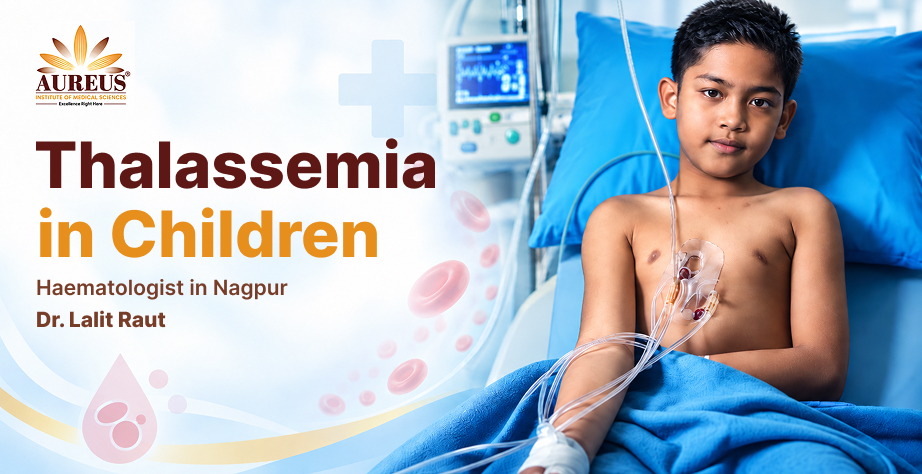
Parents can be confused, anxious and overwhelmed when their child is diagnosed with thalassaemia.
Early diagnosis can significantly impact treatment and life quality. The most the patient can do if he or she is looking for a thalassaemia doctor for kids is to go to a haematologist who is experienced in dealing with thalassaemia.
Families at Aureus Institute of Medical Sciences get specialised medical care for blood disorders with expert supervision and from experienced medical experts such as Dr Lalit Raut (Haematologist in Nagpur).
Aureus Institute of Medical Sciences is a 100-bedded super-speciality hospital in Nagpur and has been awarded with NABH+ certification standards on patient safety and quality healthcare, one of the youngest NABH certified hospitals in Central India. (Aureus Medical Institute)
What is Thalassaemia?
Thalassaemia is a hereditary blood disease in which the body makes too little normal haemoglobin. The haemoglobin helps carry oxygen around. If haemoglobin production is impaired, children can suffer from anaemia, weakness, from growth retardation and other complications.
This is a hereditary disease; that is, it is passed on by parents to children.
Thalassaemia in Children Causes
Parents’ most asked questions include:
What causes thalassemia in children?
Mutations in the genes that make haemoglobin cause thalassaemia.
Common Causes Include:
- Passing on faulty genes to children from both parents.
- History of blood disorders in the family.
- Abnormalities in the genes that make red blood cells
- Carrier thalassaemia parents
If both parents are thalassaemia carriers, the risk for thalassaemia major is increased in the child.
Risk Factors
- Family history of anaemia
- Communities with higher carrier rates
- Lack of premarital or prenatal screening
Minor Thalassaemia Symptoms
Children with thalassaemia minor do not necessarily have a clear diagnosis. Numerous cases are identified when they are part of routine blood testing.
Common Minor Thalassaemia Symptoms
Children in many instances go about their normal lives with little health problems. Diagnosis is important, though, to prevent misdiagnosis with iron deficiency anemia.
- Mild fatigue
- Weakness
- Pale skin
- Slightly low haemoglobin
- Mild anaemia
In most instances, children do not suffer from serious health problems and can lead normal lives. Proper diagnosis of the condition, however, is important since this can be mistaken for iron deficiency anaemia.
Thalassaemia Major Symptoms
Thalassaemia major is a more severe form, which typically presents in the first two years of life.
Common Thalassaemia Major Symptoms
- Severe anaemia
- Extreme tiredness
- Delayed growth and development
- Enlarged spleen
- Bone deformities, especially facial bones
- Yellowish skin (jaundice)
- Poor appetite
- Frequent infections
If not properly treated, medical complications can arise with time.
Early Signs Parents Should Never Ignore
If a child has any of the following symptoms, parents should see a haematologist:
- Persistent weakness
- Recurrent low haemoglobin
- Slow growth
- Pale appearance
- Frequent blood transfusion requirements
- Family history of thalassaemia
Early intervention makes a very positive contribution to long-term health.
How is Thalassaemia Diagnosed?
A number of tests may be requested to confirm the diagnosis.
Diagnostic Tests Include:
- Complete Blood Count (CBC)
- Peripheral smear examination
- Haemoglobin electrophoresis
- Genetic testing
- Iron studies
Thalassaemia in Children Treatment
Parents are often looking for the best treatment for thalassemia in children. The treatment depends on how serious the condition is.
Treatment Options
1. Blood Transfusions
Thalassaemia major is a condition that requires frequent blood transfusions for the child to keep his/her haemoglobin at normal levels.
2. Iron Chelation Therapy
Rarely, repeated transfusion will cause iron overload. Chelation medicines are used to get rid of excess iron from the body.
3. Nutritional Support
Proper nutrition promotes growth and immunity.
4. Bone Marrow Transplant
In certain cases bone marrow transplant can be a cure.
5. Regular Monitoring
It is important for children to have regular follow-up with their haematologist to check on:
- Iron levels
- Heart health
- Liver function
- Growth and development
Daily Care Tips for Children with Thalassaemia
There is more to dealing with thalassaemia than just medicines and transfusions.
Helpful Lifestyle Tips
- Provide routine medical checks-up.
- Maintain vaccination schedules
- Encourage healthy nutrition
- Avoid self-medication
- Support emotional wellbeing
- Promote safe physical activity
Child confidence and wellbeing is important and is shaped by parental awareness and emotional support.
Why Early Screening Matters
In India screening of a carrier and genetic counseling are growing essential. Earlier detection assists the families in making the right decisions on healthcare.
Benefits of Early Screening
- Prevents delayed diagnosis
- Helps manage complications early
- Supports family planning
- Reduces severe disease burden
The incidence of severe thalassaemia can be lowered in the future through health practice and awareness campaigns by regular health checks.
Thalassaemia in Nagpur: Finding Expert Care
For families with a child suffering from thalassaemia in Nagpur, they should opt for a hospital that has experienced haematologists, transfusion facilities, and long-term management areas for thalassaemia patients.
At Aureus Institute of Medical Sciences, patients benefit from:
- NABH-accredited healthcare standards
- Comprehensive haematology support
- Advanced diagnostic facilities
- Multidisciplinary patient care
- Experienced specialists and nursing staff
The hospital continues to focus on safe, quality, and comprehensive healthcare for patients across Central India. (Aureus Institute of Medical Science)
When Should You Visit a Thalassaemia Doctor in Nagpur?
Your child should see a thalassemia doctor in Nagpur right away if they have:
- Frequent anaemia
- Unexplained fatigue
- Growth delays
- Family history of thalassaemia
- Need for repeated transfusions
Appropriate consultation at an early stage minimises risks and facilitates life-long benefits.
Frequently Asked Questions (FAQs)
1. Is thalassaemia curable?
Some severe cases may be treated with bone marrow transplantation. But many children can do well with treatment and regular monitoring for this condition.
2. What life is like for a child who has thalassaemia.
Yes. Most children are able to have an active and healthy childhood with regular treatment, medical supervision and good nutrition.
3. Is thalassaemia inherited?
Yes, it’s a blood disorder that’s passed down from parents to children.
4. Is there a way to prevent thalassaemia?
There are ways to lower the risk such as before pregnancy, before becoming pregnant or planning a pregnancy, through carrier screening and genetic counselling.
5. What is the difference between thalassaemia minor and major?
Thalassaemia minor is typically mild and thalassaemia major is more serious and may require regular blood transfusions for life.
Conclusion
The treatment of thalassaemia demands a lifetime treatment, emotional support and timely intervention. By knowing more about thalassaemia in children, knowing minor thalassaemia symptoms and thalassaemia major symptoms, and taking expert advice at the early stage can make a difference to one’s life.
In Nagpur, an experienced haematologist’s advice and opting for a hospital with NABH accreditation will give families peace of mind and better treatment for thalassaemic complications.
For Further Information on Specialised Haematology Care visit Aureus Institute of Medical Sciences – Haematology & Haemato Oncology Department.