Do You Always Need Angioplasty After Angiography?
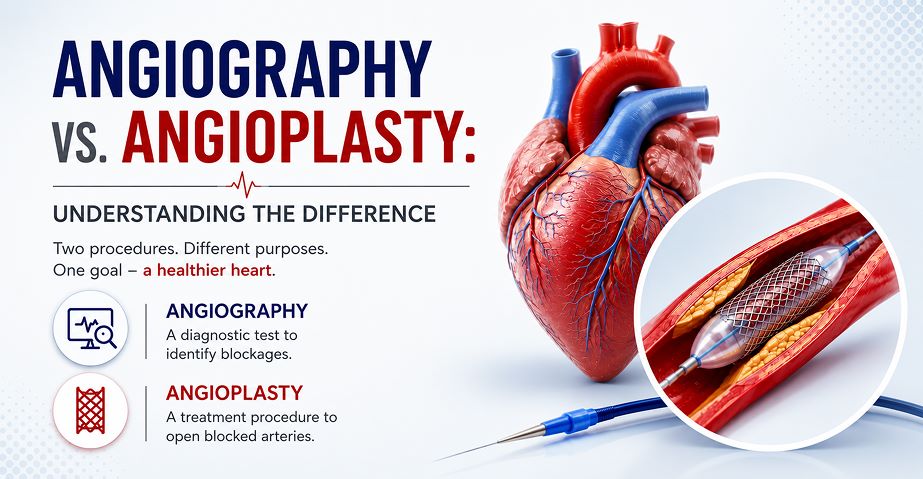
No, Many patients undergo angiography and find no significant blockage or a blockage mild enough to manage with medication and lifestyle changes alone. Angioplasty is only recommended when the blockage is severe enough to restrict blood flow and pose a risk of chest pain, heart attack, or heart failure.
This is exactly why choosing the best cardiologist in Nagpur matters — an experienced specialist won’t rush into a procedure unless it’s truly necessary.
At Aureus Hospital cases are reviewed by an experienced interventional cardiology team before deciding on the right treatment path.
Is Angioplasty a Major Surgery?
Not in the traditional sense. Angioplasty is a minimally invasive procedure, not open-heart surgery. There are no large incisions — just a small puncture in the wrist or groin. Most patients are up and walking within a day and back to normal routines within a week, depending on their overall health.
For more complex cases — such as multiple blocked arteries or blockages unsuitable for stenting — Aureus Hospital’s cardiology department also offers advanced cardiac surgery in nagpur including bypass surgery, under one roof.
Which One Do I Need?
Only a cardiologist can determine this after reviewing your symptoms, ECG, echocardiogram, and risk factors. As a general guide:
- Chest pain, breathlessness, or abnormal stress test → Angiography is usually recommended first to identify the cause.
- Confirmed blockage over 70% → Angioplasty is typically advised to restore proper blood flow.
- Multiple or complex blockages → Your doctor may recommend bypass surgery instead.
Why Choose Aureus Hospital for Angiography and Angioplasty in Nagpur?
If you are searching for a cardiac hospital in Nagpur, Aureus institute of Medical Sciences has the following facilities:
- Leading Cardiac Hospital in Nagpur:100-bedded super-specialty cardiac hospital.
- NABH & NABH+ Accredited:
Trusted for quality and patient safety. - Complete Heart Care: Angiography, angioplasty, bypass surgery, and more.
- Experienced Specialists: 24+ years of collective clinical expertise.
- Advanced Cath Lab: Modern technology for precise heart procedures.
- Trusted Heart Surgery Hospital in Nagpur: Expert care for all heart conditions.
- Patient-First Care: Transparent treatment with no unnecessary procedures.
- 24/7 Cardiac Emergency: Quick response when every minute matters.
- Cashless Insurance: Treatment supported by major insurance providers.
- Personalised Care: Compassionate support from diagnosis to recovery.
Meet the Cardiologist: Dr. Pankaj Raut
Dr. Pankaj Raut (MD (Medicine), DM (Cardiology) is a senior interventional cardiologist at Aureus Hospital, Nagpur, specializing in coronary angiography, angioplasty, and complex cardiac interventions. With advanced training including a Fellowship of the American College of Cardiology (FACC), he brings extensive expertise in diagnosing and treating heart conditions using the latest cath lab technology.
📍 Aureus Institute of Medical Sciences, Plot No 16, Medical College Road, Wanjari Nagar, Nagpur