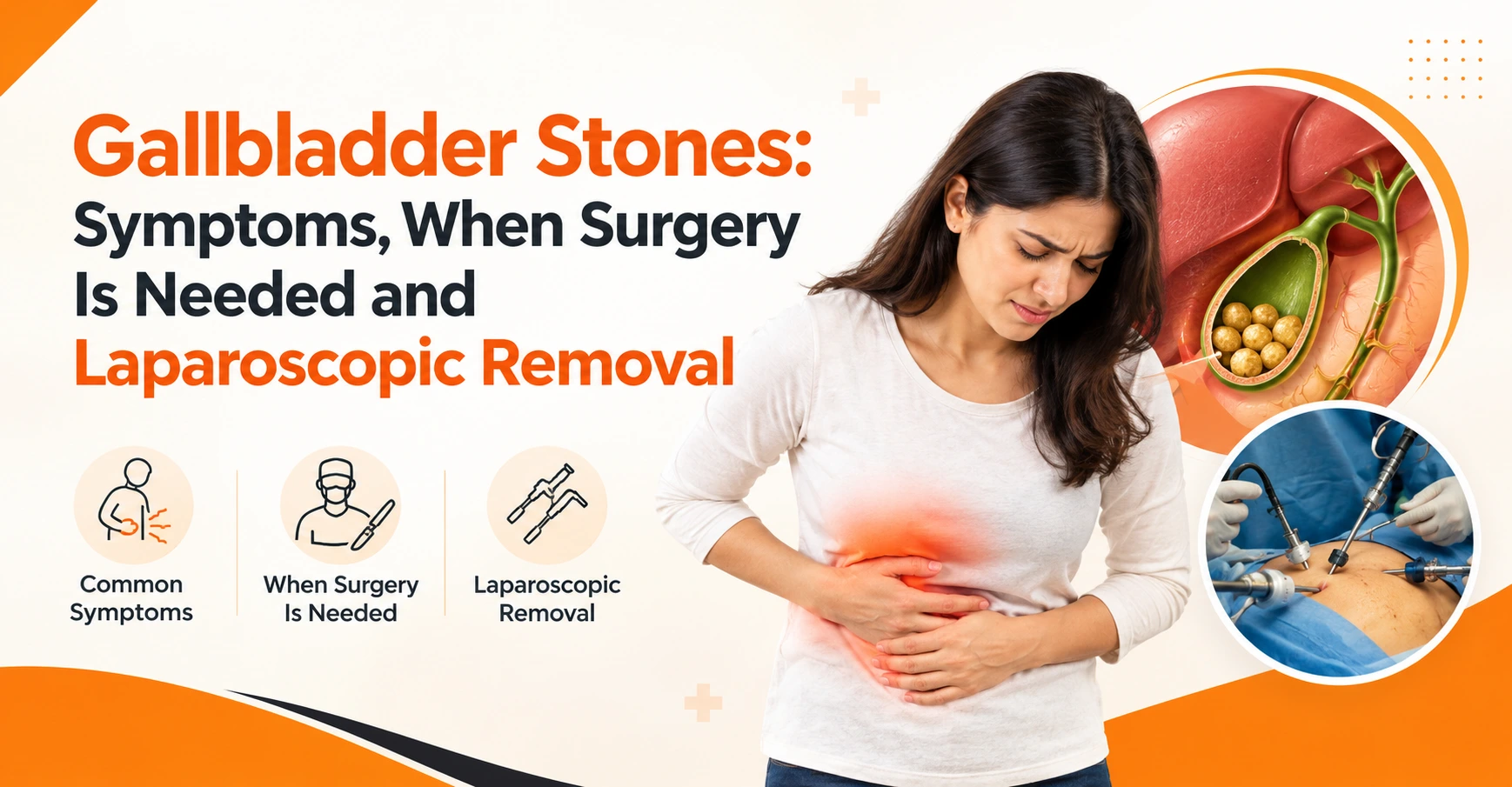
Gallbladder Stones: Symptoms, When Surgery Is Needed and Laparoscopic Removal
The gallbladder is a small pouch located under the liver on the upper right side of your abdomen. It houses bile, a substance which aids digestion of fat. In some cases, the substances in bile turn into stones.
Gallstones are very common and many people don’t know that they have them. However, others experience sudden sharp pain post eating and look for solutions ranging from gallstone surgery in Nagpur. The need for treatment will depend on whether the stones are causing symptoms or complications. This information explains the symptoms, when surgery is recommended, and how the surgery is performed when it is laparoscopic.

What Are Gallbladder Stones?
Gallstones are stones that develop in the gall bladder. They can consist primarily of cholesterol or other materials and are of various sizes. Some of these do not cause any symptoms, and others obstruct the bile flow, causing pain, inflammation, infection, or other complications.
They are as small as a grain of sand or as big as a marble. One could have one stone or many stones.
What Causes Gallbladder Stones?
Stones develop when the composition of the bile is disturbed or when there is an inadequate emptying of the gall bladder. These are common risk factors:
Increased BMI/Body fat percentage.
- Being overweight or obese.
- Rapid weight loss.
- Pregnancy.
- Increasing age.
- Female sex.
- Family history.
- Some medical/metabolic disorders and medications.
Risk factors do not guarantee that you will get gallstones.
What Are the Symptoms of Gallbladder Stones?
The majority of gallstones have no symptoms. If the stones interfere with the bile flow, it may lead to pain, nausea, vomiting, bloating, fever or jaundice. These symptoms can occur in different individuals and also are symptoms of other conditions, making them require a physician’s evaluation.
1. Sudden Pain in the Upper Abdomen
Usually, gallstones cause pain in the upper right or upper middle abdominal area. It tends to come after a fatty meal or after eating a lot and it sometimes happens at night. Can extend to the right shoulder or back. Not all abdominal pain in the upper abdomen is due to gallstones.
2. Nausea and Vomiting
Pain attacks are often accompanied by nausea, vomiting and general abdominal discomfort.
3. Bloating and Indigestion
For some, food consumption may lead to a feeling of bloating, fullness or discomfort. These symptoms occur frequently and may result from many causes and do not prove the presence of gallstones.
4. Fever or Chills
If you have a fever or chills, you may be having an inflammatory or infection reaction and should not ignore it.
5. Jaundice
An obstructed bile duct may cause the skin and eyes to turn yellow. It should be promptly evaluated medically.
When Is Surgery Needed for Gallstones?
Surgery is often recommended if the gallstones are causing multiple or severe symptoms, complications, or inflammation. Depending on the individual, people with gallstones that don’t have any symptoms don’t always need surgery.
Common indications for surgery to recommend it:
- Repeated attacks. If gallstones are causing symptoms such as recurring attacks of usual gallstone pain, they are likely to be stones.
- Acute cholecystitis. If there is a stone blocking the outlet of the gall bladder, it can cause chronic pain, fever, tenderness, nausea and vomiting.
- Stones in the common bile duct. Stones can enter the bile duct and lead to various complications like jaundice, infection or pancreatitis.
- Gallstone pancreatitis. A stone may obstruct the drainage and irritate the pancreas. This is serious and should be seen by a medical professional.
Can Gallstones Go Away Without Surgery?
Not reliably. Silent stones may not require any treatment but can be watched. Diet changes help to reduce symptoms but not remove existing stones. Selected cases: Medication is used but not suitable for all. Surgery may be necessary for larger or symptomatic stones or complicated stones.
Do not try any “gallbladder flushes”, detoxes and home remedies that are supposed to dissolve stones. They do not have proven effects and could be dangerous.
What Is Laparoscopic Gallbladder Surgery?
Keyhole surgery which involves the removal of the gall bladder is called Laparoscopic cholecystectomy. It involves small incisions via camera and fine instruments and generally is performed under general anaesthetic.
The stones are not removed, the entire gallbladder is taken out. If stones were removed but the gall bladder remained, it could lead to the development of new stones.
What Are the Benefits of Laparoscopic Gallbladder Removal?
Laparoscopic surgery typically has the following advantages over traditional open surgery:
- Less scarring and smaller incisions.
- Minimises pain in the recovery process.
- In many cases, it will also reduce blood loss.
- A better recovery experience for many patients, with earlier movement and recovery.
- Enhanced recovery (in suitable patients)
The recovery time depends on the patient’s health, the complexity of the surgery and the presence of complications.
How Is Laparoscopic Gallbladder Removal Performed?
Following processes will take place when you go for gallbladder removal:
- You receive anaesthesia.
- The surgeon makes small cuts in the abdomen.
- A laparoscope (a thin camera) is inserted.
- The surgeon views the gallbladder on a monitor.
- The gallbladder is carefully separated from surrounding tissue.
- The cystic duct and blood vessels are secured safely.
- The gallbladder is removed.
- The incisions are closed.
Surgery time and approach vary with your anatomy and condition.
What Is Recovery Like?
There will be monitoring following surgery. Depending on the procedure as well as their health, some may find themselves going home quite soon. Normal abdominal discomfort and/or temporary changes in the digestive system occur in some cases. Typically, normal activities are slowly resumed as directed by the surgeon.
Is Laparoscopic Surgery Suitable for Everyone?
Laparoscopic Surgery is used regularly, but the way it’s done is dependent on the person’s overall health, prior abdominal surgeries, extent of inflammation, person’s anatomy and what the surgeon sees during the operation. In some instances the surgeon will switch to open surgery. This is done for safety reasons and is not due to failure of the procedure.
Choosing a Laparoscopic Surgeon in Nagpur
It’s important to have training and experience for laparoscopic surgery. In search of a laparoscopic surgeon in Nagpur, one should look into the qualifications of the surgeon and how often cases of his/ her life are being treated.
Dr. Nirmal Patle is a registered Bariatric & Laparoscopic Surgeon on the Aureus Hospital website from Nagpur. He has qualifications of MS, DNB, FNB (Minimal Access Surgery) and MNAMS. He has more than 20 years of experience and specialisation in the fields of laparoscopic (minimal access) surgery and gastrointestinal surgery. It includes gallstone disease.
Where Can You Get Gallstone Surgery in Nagpur?
When you are looking for gall bladder surgery in Nagpur then you should think about:
- Surgeon’s relevant experience.
- Laparoscopic (hand surgery) and minimally invasive techniques are available.
- Nonetheless, diagnostic, anaesthesia and postoperative monitoring supports are offered.
- Emergency surgical backup.
- Follow-up care.
Gallbladder and Bile Duct Disease is a condition treated by Aureus Hospital’s General & Minimal Access Surgery department as well as the Gastroenterology & GI Surgery department.
When Should You Seek Urgent Medical Attention?
If you have:
- Referred pain that is severe or persists.
- Fever and stomach pain, or shaking chills.
- Jaundice of the skin and/or eyes.
- Repeated vomiting.
- Severe weakness.
Final Thoughts
Gallstones are very common and can be treated. Do not overlook if you get persistent pain after eating or if a scan reveals stones. Your surgeon can determine if treatment is necessary or if you can just monitor. Dr. Nirmal Patle is working with patients at Aureus hospital, Nagpur. A consultation can be arranged to talk about symptoms and reports.